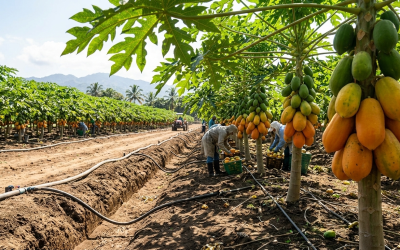
Irrigation schemes in Kenya play a major role in improving food production, supporting farmers, and reducing dependence on rainfall. With climate change and unpredictable weather patterns affecting agriculture, irrigation has become essential for sustainable farming and national food security.
Kenya has several large-scale and small-scale irrigation schemes spread across counties such as Kirinyaga, Kisumu, Tana River, Baringo, and Busia. These schemes support the production of rice, maize, vegetables, onions, cotton, and horticultural crops.
According to Kenya’s irrigation authorities, formal irrigation development started in the 1940s and expanded significantly after the creation of the National Irrigation Board in 1966.
What Is an Irrigation Scheme?
An irrigation scheme is an organized system that supplies water to crops in areas where rainfall is insufficient or unreliable.
Irrigation schemes typically include:
- Water reservoirs
- Rivers or dams
- Canals
- Pumps
- Pipes
- Drainage systems
- Water control infrastructure
These systems help farmers grow crops throughout the year.
Importance of Irrigation Schemes in Kenya
Irrigation schemes are critical because they:
- Improve food production
- Support year-round farming
- Reduce drought-related crop losses
- Increase farmer incomes
- Create employment
- Improve food security
Kenya’s irrigated agriculture contributes significantly to agricultural production despite covering a relatively small percentage of agricultural land.
Major Irrigation Schemes in Kenya
1. Mwea Irrigation Scheme
Mwea Irrigation Scheme
Location
Kirinyaga County
Main Crops
- Rice
- Tomatoes
- Onions
- French beans
Mwea is the largest rice irrigation scheme in Kenya and one of the most productive agricultural regions in the country. It was established in the 1950s and supports thousands of farmers. Water is sourced mainly from River Nyamindi and River Thiba.
The scheme produces a large percentage of Kenya’s locally grown rice.


2. Ahero Irrigation Scheme
Ahero Irrigation Scheme
Location
Kisumu County
Main Crops
- Rice
- Maize
- Tomatoes
- Watermelon
- Sorghum
Ahero Irrigation Scheme is located in the Kano Plains near Lake Victoria. It uses water from River Nyando and is one of the major rice-growing schemes in western Kenya.
The scheme supports thousands of farmers and contributes significantly to regional food production.
3. Bura Irrigation Scheme
Bura Irrigation Scheme
Location
Tana River County
Main Crops
- Maize
- Rice
- Cotton
- Green grams
- Watermelon
- Tomatoes
Bura Irrigation Scheme is one of Kenya’s largest irrigation projects in arid and semi-arid regions. Water is pumped from River Tana to support agriculture in dry areas.
The scheme is known for crop diversity and large-scale farming potential.


7
4. Perkerra Irrigation Scheme
Perkerra Irrigation Scheme
Location
Baringo County
Main Crops
- Onions
- Maize
- Watermelons
- Vegetables
Perkerra Irrigation Scheme is located near Marigat Town and depends on River Perkerra for irrigation. The scheme supports farmers in one of Kenya’s semi-arid regions.
The area is particularly known for onion farming.
5. West Kano Irrigation Scheme
West Kano Irrigation Scheme
Location
Kisumu County
Main Crops
- Rice
- Maize
- Vegetables
West Kano is another important rice-growing irrigation scheme located near Lake Victoria. It contributes to rice production in western Kenya.
6. Bunyala Irrigation Scheme
Bunyala Irrigation Scheme
Location
Busia County
Main Crops
- Rice
- Vegetables
Bunyala Irrigation Scheme uses water from River Nzoia and mainly focuses on rice production.
7. Galana-Kulalu Irrigation Project
Galana-Kulalu Irrigation Project
Location
Kilifi and Tana River Counties
Main Crops
- Maize
- Horticultural crops
- Food security crops
Galana-Kulalu is among Kenya’s most ambitious irrigation projects aimed at improving national food security through large-scale irrigation farming.
The project continues to receive investment for expansion and infrastructure development.


7
Types of Irrigation Used in Kenya
Kenyan irrigation schemes use several irrigation methods.
Surface Irrigation
Water flows through canals using gravity.
Common in:
- Mwea
- Ahero
- West Kano
Sprinkler Irrigation
Water is sprayed through pressurized sprinklers.
Suitable for:
- Large farms
- Horticulture
Drip Irrigation
Water is delivered directly to plant roots.
Common for:
- Greenhouse farming
- Vegetables
- Fruits
Solar Irrigation
Solar-powered pumps are increasingly used in remote areas.
Challenges Facing Irrigation Schemes in Kenya
Despite their importance, irrigation schemes face several challenges.
Water Shortages
Climate change affects river flows and water availability.
High Operational Costs
Some schemes rely on expensive diesel pumps.
Siltation and Flooding
Flooding damages canals and crops in some regions.
Poor Infrastructure Maintenance
Aging canals and irrigation systems reduce efficiency.
Land Conflicts
Some irrigation areas experience disputes over land ownership and water usage.
Modernization of Irrigation in Kenya
Kenya is increasingly adopting modern irrigation technologies including:
- Smart irrigation systems
- Solar-powered pumps
- IoT-based monitoring
- Drip irrigation
- Climate-smart farming
Many farmers are also embracing greenhouse farming combined with automated irrigation systems.
Discussions among Kenyan farmers increasingly emphasize modern irrigation as a solution to food insecurity and unreliable rainfall.
Role of the National Irrigation Authority (NIA)
The National Irrigation Authority manages many public irrigation schemes across Kenya including:
- Mwea
- Bura
- Ahero
- Perkerra
- West Kano
- Bunyala
- Tana
The authority oversees irrigation development, water management, and support for irrigated agriculture.
Future of Irrigation in Kenya
The future of Kenyan agriculture heavily depends on irrigation expansion.
Experts believe irrigation can help:
- Improve food security
- Reduce dependence on imports
- Increase farmer incomes
- Create employment
- Strengthen climate resilience
With increasing government investment and private-sector participation, irrigation farming is expected to continue expanding across Kenya.
Final Thoughts
Irrigation schemes in Kenya remain essential for modern agriculture and national food security. Projects such as Mwea Irrigation Scheme, Ahero Irrigation Scheme, and Galana-Kulalu Irrigation Project continue transforming farming by enabling year-round crop production.
As Kenya faces increasing climate challenges, irrigation will become even more important in supporting sustainable agriculture, economic growth, and rural livelihoods.