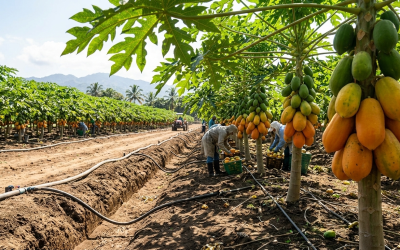
Agriculture remains the backbone of Kenya’s economy, supporting millions of households and contributing significantly to employment, exports, and food security. However, many farmers, agribusinesses, and stakeholders argue that certain government policies and regulatory decisions continue to negatively affect the agricultural sector.
From taxation and import policies to high input costs and poor market regulation, several government actions have made farming more expensive and less profitable for many Kenyan farmers.
Below are some of the key government policies and issues affecting agriculture negatively in Kenya.
1. High Taxation on Agricultural Inputs
One of the biggest complaints from farmers is the rising cost of farm inputs due to taxes and levies.
Affected Inputs
- Fertilizers
- Pesticides
- Farm machinery
- Irrigation equipment
- Plastic greenhouse materials
- Fuel
Although some agricultural inputs receive tax exemptions, many related farming products still attract:
- VAT
- import duty
- excise taxes
- fuel levies
Negative Effects
- Increased production costs
- Reduced profitability
- Higher food prices
- Lower smallholder participation
Small-scale farmers are the most affected because they operate on limited budgets.
2. Frequent Changes in Import and Export Policies
Kenya has repeatedly changed policies involving:
- maize imports
- sugar imports
- rice imports
- fertilizer imports
- export permits
These sudden policy shifts create uncertainty for farmers and investors.
Negative Effects
- Unstable market prices
- Reduced investor confidence
- Unfair competition from cheap imports
- Farmer losses during harvest periods
For example, when cheap imported maize enters the market during local harvest seasons, Kenyan maize farmers often suffer heavy losses.
3. Poor Fertilizer Subsidy Distribution
The government regularly announces fertilizer subsidy programs, but farmers often complain about:
- delays
- corruption
- shortages
- unequal distribution
Some farmers fail to access subsidized fertilizer despite registration.
Negative Effects
- Delayed planting
- Reduced yields
- Increased farming costs
- Frustration among smallholders
In some regions, farmers are forced to buy commercial fertilizer at very high prices after subsidy delays.
4. High Fuel Prices and Transport Levies
Government fuel taxes and road levies significantly affect agriculture because transport is essential in farming.
High fuel prices increase:
- tractor operating costs
- irrigation pumping expenses
- transportation of produce
- food distribution costs
Negative Effects
- Higher market prices
- Reduced farm profits
- Expensive logistics
- Increased post-harvest losses
Farmers in remote areas are especially affected due to poor road infrastructure.
5. Poor Regulation of Middlemen and Markets
Many farmers believe the government has failed to regulate agricultural markets effectively.
Middlemen often exploit farmers by:
- buying produce at low prices
- manipulating market access
- controlling transportation
Most Affected Sectors
- maize
- potatoes
- tomatoes
- onions
- milk
- fruits
Negative Effects
- Low farmer earnings
- Price instability
- Food waste
- Reduced agricultural motivation
Farmers often sell produce below production cost because of weak market protection.
6. Delayed Payments to Farmers
Government-managed sectors sometimes delay payments to farmers.
This has affected:
- sugarcane farmers
- coffee farmers
- milk suppliers
Negative Effects
- cash flow problems
- farm debt
- inability to buy inputs
- reduced production
Many farmers struggle financially while waiting months for payments.
7. Weak Irrigation Policies and Investment
Kenya still relies heavily on rain-fed agriculture despite frequent droughts.
Many farmers feel the government has not invested enough in:
- irrigation infrastructure
- dams
- water harvesting
- climate-smart farming
Negative Effects
- crop failure during drought
- food shortages
- low productivity
- unreliable farming seasons
Large parts of Kenya remain underutilized agriculturally because of inadequate irrigation systems.
8. Land Fragmentation and Poor Land Policies
Population growth and inheritance practices continue fragmenting agricultural land into uneconomical small pieces.
Weak land-use planning policies contribute to:
- shrinking farmland
- urban encroachment
- reduced commercial farming
Negative Effects
- low mechanization
- low productivity
- unsustainable farming
- reduced food production
Young people also struggle to access affordable agricultural land.
9. Inadequate Support for Agricultural Research
Agricultural research institutions often face:
- underfunding
- outdated equipment
- limited extension services
Farmers therefore lack access to:
- modern farming methods
- climate adaptation strategies
- disease-resistant seeds
Negative Effects
- low productivity
- poor innovation adoption
- increased crop diseases
- reduced competitiveness
10. Weak Enforcement Against Fake Agricultural Inputs
Kenya continues to struggle with counterfeit:
- fertilizers
- pesticides
- seeds
- veterinary drugs
Many farmers unknowingly buy fake products.
Negative Effects
- crop losses
- low yields
- financial losses
- soil damage
Poor enforcement has allowed illegal agro-input dealers to continue operating.
11. Excessive Bureaucracy and Licensing
Farmers and agribusinesses sometimes face:
- complicated licensing
- multiple permits
- overlapping regulations
This affects:
- exporters
- agro-processors
- seed companies
- agritech startups
Negative Effects
- delayed business growth
- reduced investment
- higher operating costs
Small agribusinesses especially struggle with compliance costs.
12. Climate Policies Without Adequate Farmer Support
While environmental protection is important, some environmental restrictions affect farming communities without sufficient alternatives.
Examples include:
- forest access restrictions
- charcoal bans
- water usage regulations
Without proper support programs, some farmers lose income opportunities.
How These Policies Affect Food Security
Negative agricultural policies can lead to:
- reduced food production
- expensive food prices
- increased imports
- rural poverty
- youth unemployment
Agriculture affects millions of Kenyans directly and indirectly, making policy decisions extremely important.
What Farmers Want from the Government
Farmers and agricultural stakeholders continue calling for:
Affordable Inputs
Lower taxes on fertilizers, machinery, and irrigation equipment.
Better Irrigation Investment
Expansion of irrigation schemes and water harvesting systems.
Stable Agricultural Policies
Consistent import/export rules and long-term planning.
Improved Market Regulation
Protection against exploitative middlemen.
Better Roads and Storage
Reduced transport and post-harvest losses.
Access to Credit
Affordable agricultural loans and insurance.
Stronger Extension Services
Training and modern farming education.
Final Thoughts
Kenya has enormous agricultural potential, but several government policies and implementation challenges continue affecting the sector negatively. High taxation, poor market regulation, weak irrigation investment, and rising production costs have made farming increasingly difficult for many farmers.
For Kenya to achieve long-term food security and agricultural growth, policies must focus on:
- supporting farmers
- reducing production costs
- improving infrastructure
- encouraging agribusiness investment
- strengthening climate resilience
A farmer-friendly policy environment is essential for transforming agriculture into a profitable and sustainable sector for future generations.