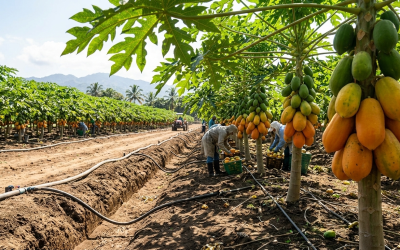
Contract farming is becoming increasingly popular in Kenya as farmers look for guaranteed markets, stable income, and technical support. It is widely used in sectors such as the following:
- horticulture
- dairy farming
- poultry
- sugarcane
- tea
- coffee
- avocado farming
- French beans
- chili farming
- barley farming
Many Kenyan farmers are now partnering with companies, exporters, processors, and supermarkets through farming contracts.
What Is Contract Farming?
Contract farming is an agreement between a farmer and a buyer in which the farmer agrees to produce specific agricultural products under agreed-upon conditions.
The buyer may provide:
- seeds
- fertilizer
- technical support
- financing
- guaranteed market
while the farmer agrees to the following:
- produce the crop or livestock
- meet quality standards
- deliver agreed quantities
The agreement is usually formalized through a written contract.
Types of Contract Farming in Kenya
1. Production Contracts
The buyer controls most production activities.
Common in:
- Poultry farming
- Greenhouse farming
- Seed production
The company may provide:
- chicks
- feed
- veterinary services
- technical supervision
2. Marketing Contracts
The farmer handles production independently while the buyer guarantees market access.
Common in:
- avocado farming
- vegetables
- fruits
- cereals
3. Outgrower Schemes
Large companies work with many smallholder farmers.
Common in:
- tea farming
- sugarcane
- coffee
- tobacco
Farmers supply products to a processing company under long-term arrangements.
Benefits of Contract Farming
Guaranteed Market
Farmers already know where they will sell produce before planting.
This reduces:
- post-harvest losses
- market uncertainty
- exploitation by brokers
Access to Inputs
Some companies provide:
- seeds
- fertilizers
- pesticides
- animal feeds
This helps farmers who lack capital.
Technical Training
Contracted farmers often receive:
- Extension services
- Modern farming guidance
- Disease management support
Stable Income
Contract farming may provide:
- Predictable pricing
- Long-term buyer relationships
- Regular income flow
Easier Access to Financing
Banks and SACCOs may trust contracted farmers more because they already have a buyer.
Challenges of Contract Farming
Despite its benefits, contract farming also has risks.
Strict Quality Requirements
Buyers may reject produce that:
- Fails quality standards
- Has poor grading
- Is delivered late
Delayed Payments
Some companies delay paying farmers after delivery.
Exploitative Contracts
Some contracts favor companies heavily and expose farmers to losses.
Side Selling
Farmers sometimes sell produce to other buyers when market prices rise, causing conflicts with contractors.
Common Contract Farming Opportunities in Kenya
1. Avocado Farming Contracts
Export companies contract farmers for:
- Hass avocados
- Fuerte avocados
Export markets include the following:
- Europe
- Middle East
- China
Requirements usually include:
- mature trees
- proper spraying
- quality standards
2. French Beans and Vegetable Contracts
Exporters contract farmers growing the following:
- French beans
- snow peas
- chilies
- baby corn
These contracts are common in:
- Kirinyaga
- Murang’a
- Meru
- Nakuru
3. Dairy Farming Contracts
Milk processors work with dairy farmers through the following:
- milk collection agreements
- feed support
- cooling systems
4. Barley Farming Contracts
Companies like breweries contract farmers to grow barley.
Farmers usually receive:
- certified seeds
- extension support
- guaranteed purchase agreements
5. Poultry Farming Contracts
Large poultry companies contract farmers to rear the following:
- broilers
- layers
The company may provide:
- chicks
- feed
- veterinary services
How to Secure a Contract Farming Opportunity in Kenya
1. Choose a High-Demand Crop or Enterprise
Focus on products with strong demand, such as:
- avocados
- onions
- chilies
- French beans
- poultry
- dairy
- herbs
- macadamia
Research export and local market trends first.
2. Register Your Farm Properly
Professional buyers prefer organized farmers.
Important steps include:
- keeping farm records
- registering farmer groups
- obtaining certifications if required
- maintaining proper land ownership documents
3. Join Farmer Cooperatives or Groups
Most companies prefer working with groups because:
- aggregation is easier
- logistics costs are lower
- monitoring becomes simpler
Farmer groups also improve bargaining power.
4. Attend Agricultural Trade Shows and Forums
Many contract opportunities are found through:
- agricultural expos
- county exhibitions
- farmer field days
- agribusiness conferences
These events connect farmers directly with buyers.


6
5. Maintain High Production Standards
Buyers look for farmers who can:
- produce consistently
- follow instructions
- meet quality standards
- deliver on time
Good farming practices increase your chances of securing contracts.
6. Use Digital Agriculture Platforms
Some agritech platforms connect farmers with buyers.
Farmers can find:
- market opportunities
- aggregators
- exporters
- processors
through:
- mobile apps
- farmer networks
- agribusiness websites
7. Contact Export Companies Directly
You can approach:
- horticultural exporters
- food processors
- supermarkets
- breweries
- dairy processors
Many companies list supplier requirements on their websites.
What to Check Before Signing a Farming Contract
Before signing any agreement, farmers should carefully review:
Pricing Terms
Understand:
- fixed price vs market price
- payment timelines
- deductions
Quality Requirements
Ensure you understand:
- grading standards
- rejection conditions
- packaging requirements
Input Costs
Clarify whether:
- inputs are free
- loans must be repaid
- deductions will be made later
Delivery Conditions
Know:
- collection points
- transport responsibilities
- delivery schedules
Dispute Resolution
The contract should explain how conflicts will be handled.
Red Flags to Avoid
Avoid companies that:
- refuse written agreements
- promise unrealistic profits
- ask for suspicious registration fees
- lack physical offices
- have poor farmer reputation
Always research the company before committing.
Tips for Success in Contract Farming
Successful contract farmers usually:
- keep detailed records
- follow agronomic advice
- maintain product quality
- communicate regularly with buyers
- diversify income sources
Reliability is one of the biggest factors companies consider when renewing contracts.
Future of Contract Farming in Kenya
Contract farming is expected to grow because of:
- rising food demand
- export market expansion
- agribusiness investment
- supermarket growth
- food processing industries
Technology is also improving farmer-buyer connections through:
- digital marketplaces
- farm management apps
- traceability systems
Final Thoughts
Contract farming offers Kenyan farmers a practical way to access guaranteed markets, technical support, and stable income opportunities. While challenges such as strict quality standards and unfair contracts exist, proper planning and due diligence can help farmers benefit significantly.
To secure a contract farming opportunity in Kenya, farmers should focus on:
- quality production
- professionalism
- networking
- joining cooperatives
- researching reliable buyers
With the right approach, contract farming can become a profitable and sustainable agribusiness model for both small-scale and commercial farmers in Kenya.